
WE’RE VOTING YES FOR A STRONGER MOUNT SINAI
Our historic union election begins on April 9 and 10. As senior researchers, we have the opportunity to vote to form our union in order to bargain collectively with the Mount Sinai administration over our pay, benefits, and working conditions. Below is the information you need in order to vote.
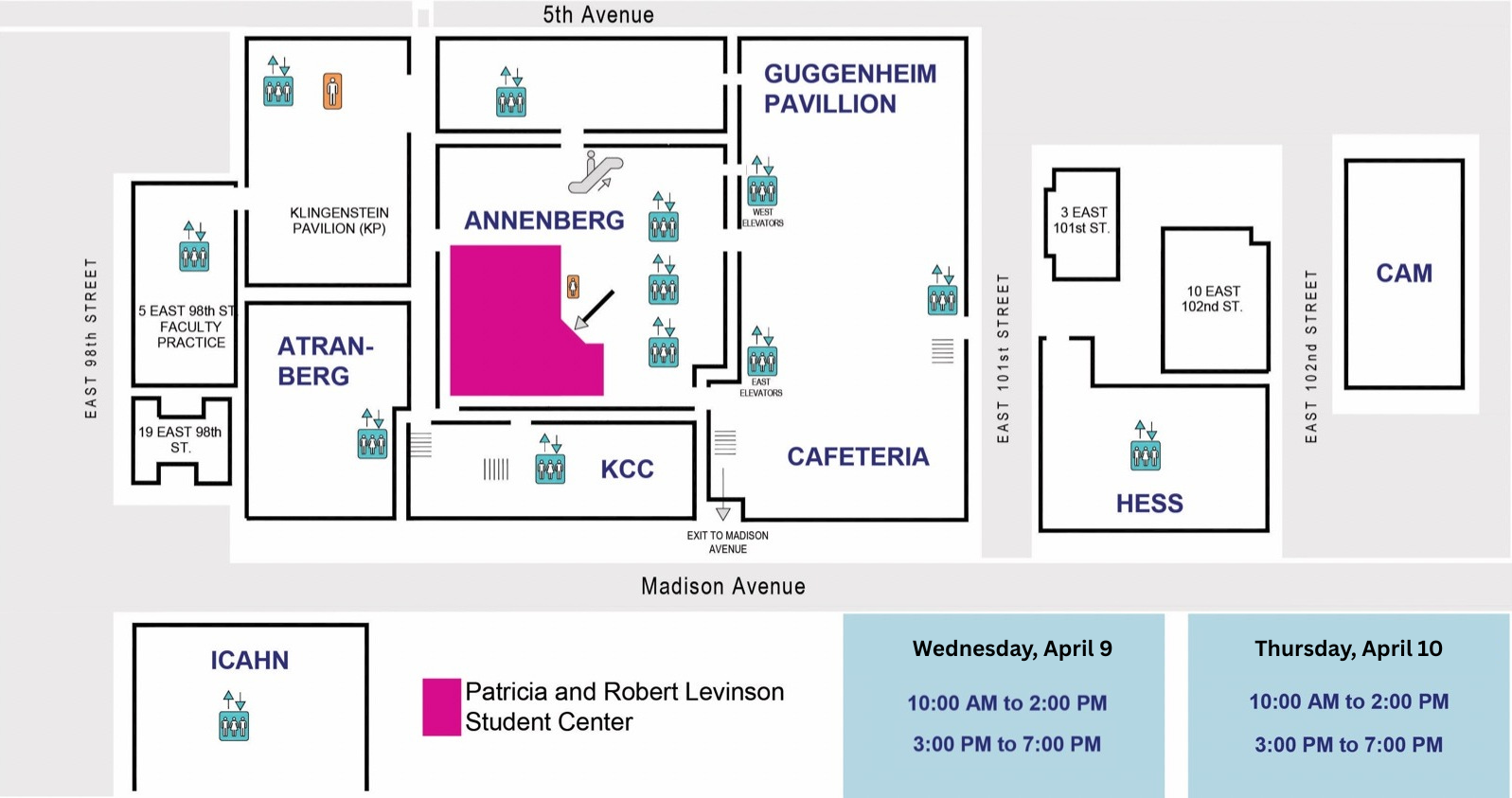
VOTING LOCATION:
-
- The Patricia and Robert Levinson Student Center on the first floor of Annenberg.
VOTING TIMES:
-
- Wednesday, April 9 from 10am-2pm and 3pm-7pm.
- Thursday, April 10 from 10am-2pm and 3pm-7pm.
ELIGIBILITY:
-
- Eligible voters are Instructors who predominantly perform research, Senior Scientists, Assistant Scientists, Associate Scientists. Positions that are not eligible include Instructors who predominantly perform teaching services or who perform clinical services.
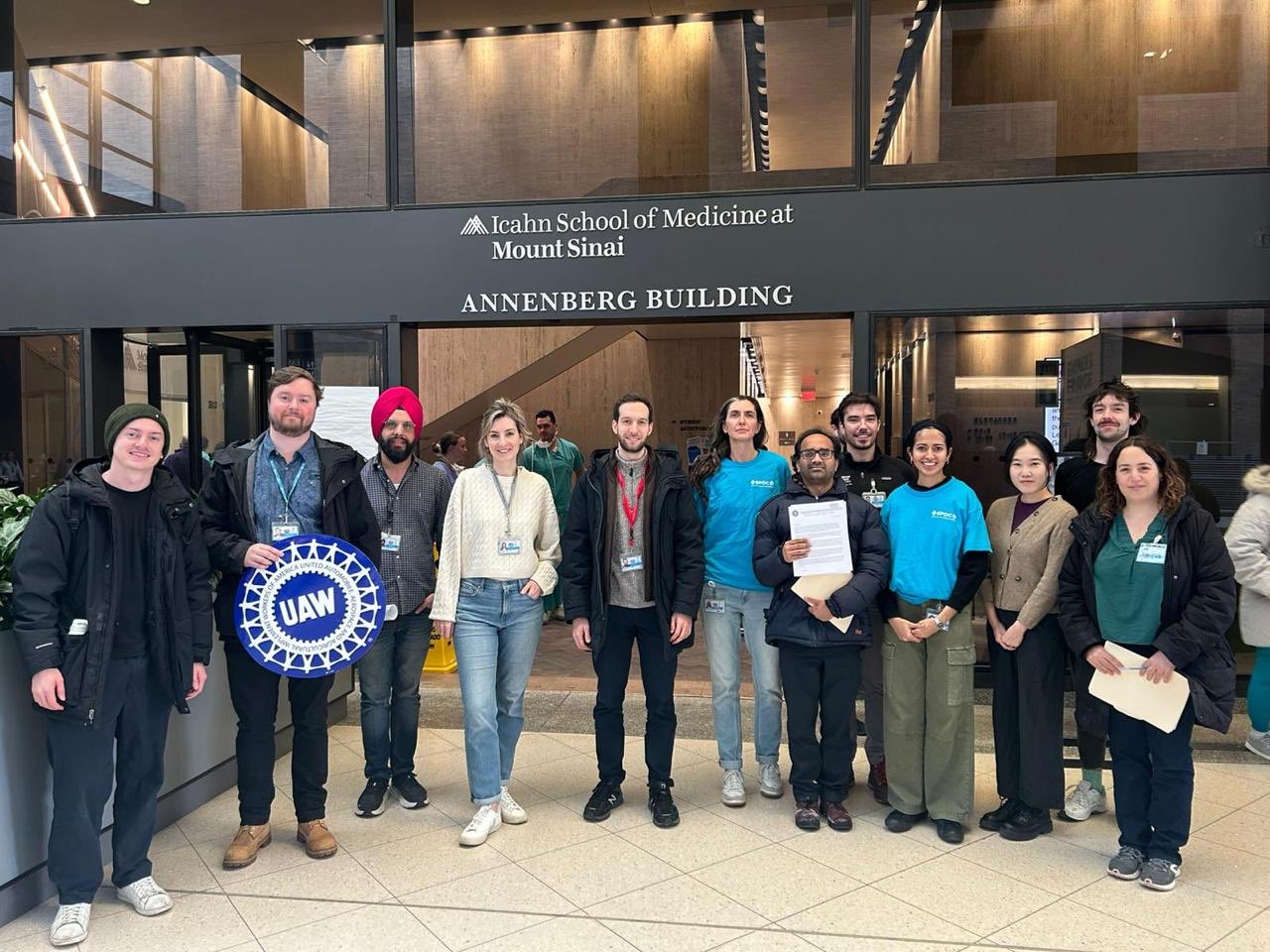
Senior researchers at Sinai launched our unionization campaign in Fall 2024, after months of conversations with coworkers showed broad support for a union.
On Wednesday, April 9 we have a historic opportunity to establish a democratic voice, create a more transparent and secure workplace, and gain a stronger collective voice in national decision-making that affects us by voting “yes” for ROCS-UAW as our union.
More than a year after we first started talking amongst coworkers about the idea of forming a union, we have a clear choice before us. With a union, the Sinai administration will have a legal obligation to negotiate with our elected representatives over pay, benefits, and workplace rights – and to secure any agreements on improvements or maintaining current benefits in a legally binding and enforceable contract.
We will also be joining our Sinai postdoc colleagues and more than 100,000 other academic employees – including postdoctoral researchers, research scientists, graduate employees, and non-tenure track faculty – who have already chosen to bargain collectively as part of UAW. As part of this movement, we can make our voices heard in decisions regarding federal research funding and immigration policy that affect everyone in our community.
Right now, the Sinai administration unilaterally decides if, when, and how to address challenges faced by senior researchers. With collective bargaining, we can meet at the bargaining table as equals. With strong participation and support from the entire researcher community, we can bargain a union contract that better meets our needs.
In hundreds of conversations, senior researchers have already identified some of the common priorities that we could address through a contract. Consider the thoughts of our colleagues and these basic reasons to vote “union yes” on Wednesday, April 9, and Thursday, April 10.
Fair workplace standards enable researchers to prioritize our research
As Instructors and Scientists, our work powers Sinai’s research mission — we make valuable contributions that have earned Sinai international renown and bring in the funding that supports day-to-day operations. We do it in the most expensive city in the country with salaries that have not kept pace with generationally-high inflation and do not reflect the expertise we bring to Mount Sinai every year.
In 2023, postdocs at Mount Sinai approved their first union contract and took their minimum salaries from among lowest for postdocs in New York City, to the highest in the country. In doing so, they helped raise the standard for other NYC institutions, leading to successful efforts to unionize by researchers at institutions like Rockefeller, Weill Cornell Medicine, and Albert Einstein College of Medicine. It is now time for us to come together as the next group of researchers at Mount Sinai to win a fair union contract with salaries and other benefits that match the experience and the value we bring to the institution, so we can focus on the quality of our research instead of how to make ends meet.
I am an associate scientist in the department of psychiatry at Mount Sinai studying mechanisms of gene regulation during human brain development. I believe that senior researchers in academia should have the right to unionize to collectively bargain for increases in salary, greater job security, and greater transparency and standardization in administrative policies, such as those regarding promotions and professional development. It is especially important for academic researchers living in expensive cities such as New York to be able to thrive economically and not worry about job stability while contributing to cutting edge biomedical research that advances science and our collective well-being.
As research instructors, we play a key role in advancing knowledge and fostering innovation. Yet, many of us face limited job security, unequal pay, and inadequate benefits. A union would allow us to advocate for fair wages, standardized contracts, and a more equitable academic environment. With the rising cost of living in NYC and the demands of our work, it’s crucial that we participate in decisions that affect our well-being. By uniting, we can create a more sustainable and inclusive academic community.
How have other researchers used a union contract to improve compensation?
More than 100,000 academic employees across the U.S. have already chosen to join UAW. This includes researchers at Columbia University, The Rockefeller University, Weill Cornell Medicine, Albert Einstein College of Medicine, Harvard University, Caltech, University of Connecticut, University of Massachusetts, University of California, and University of Washington, among others. By uniting together, academic employees are driving up standards in higher education and building a powerful voice for research scientists, postdocs, graduate workers, and non-tenure track faculty.
In June 2022, Postdoctoral Fellows at Mount Sinai voted by an overwhelming 90% in favor of unionizing with UAW, despite significant efforts by Mount Sinai to convince them to vote “no”. They went on to negotiate a historic first contract, which they ratified by 98%, raising standards for postdocs across the US. Since then, our colleagues have rigorously enforced their contractual rights, while continuing to organize around important issues for researchers.
Many of us were postdocs at Sinai previously, their working conditions are our working conditions, and we share many of the same priorities as researchers. Together, we drive the vast majority of the research at Mount Sinai, and by forming our own union, we can more effectively coordinate in order to build a stronger voice for all of us working in labs at Sinai.
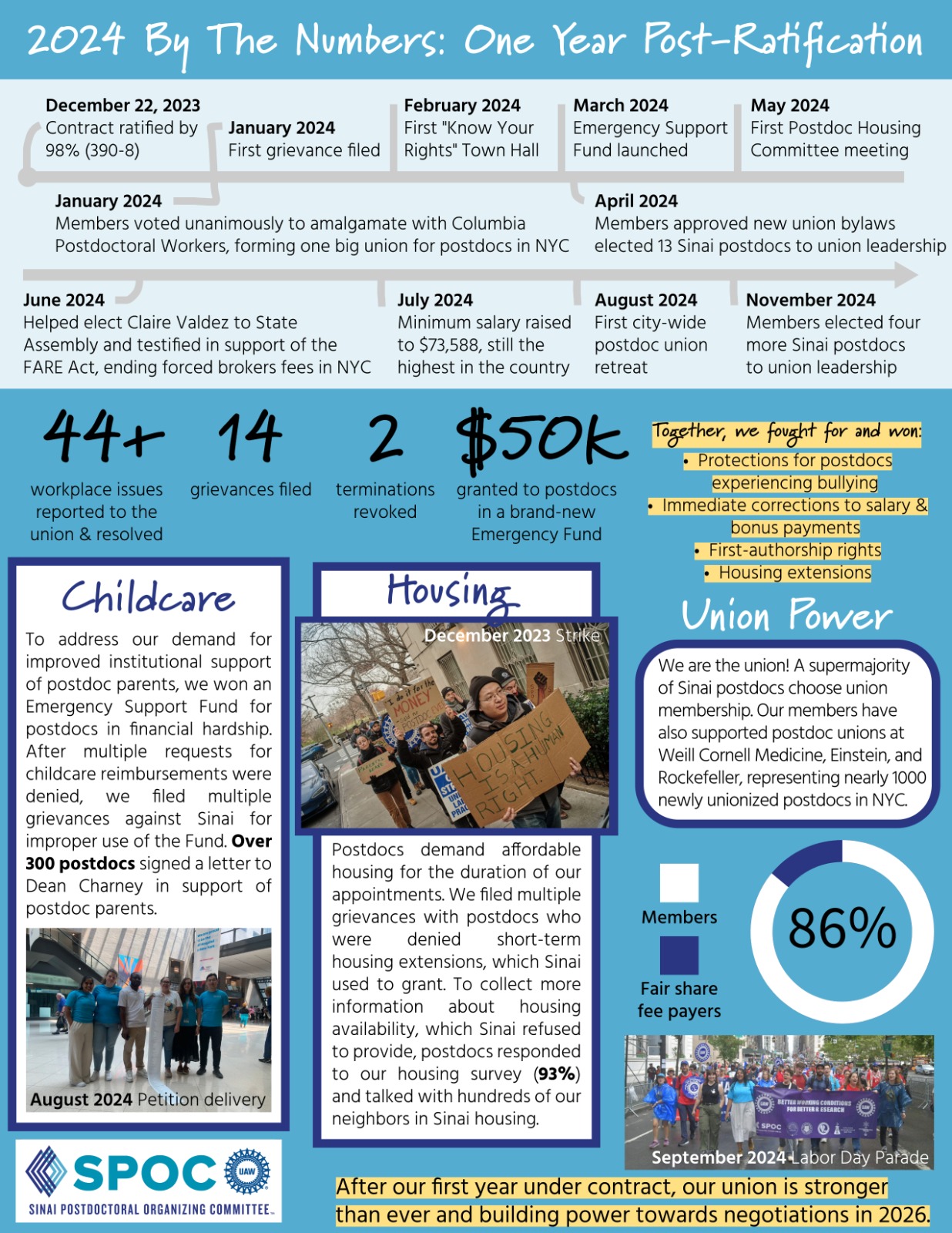
Sinai Postdocs celebrate 24% pay boost in one of the world’s most expensive cities
“How Unionization Improves the Mount Sinai Postdoc Experience”
Contract Gains for Columbia Associate Research Scientists and Postdocs
University of Washington Research Scientists Contract Highlights
See what other unionized researchers have won in their contracts
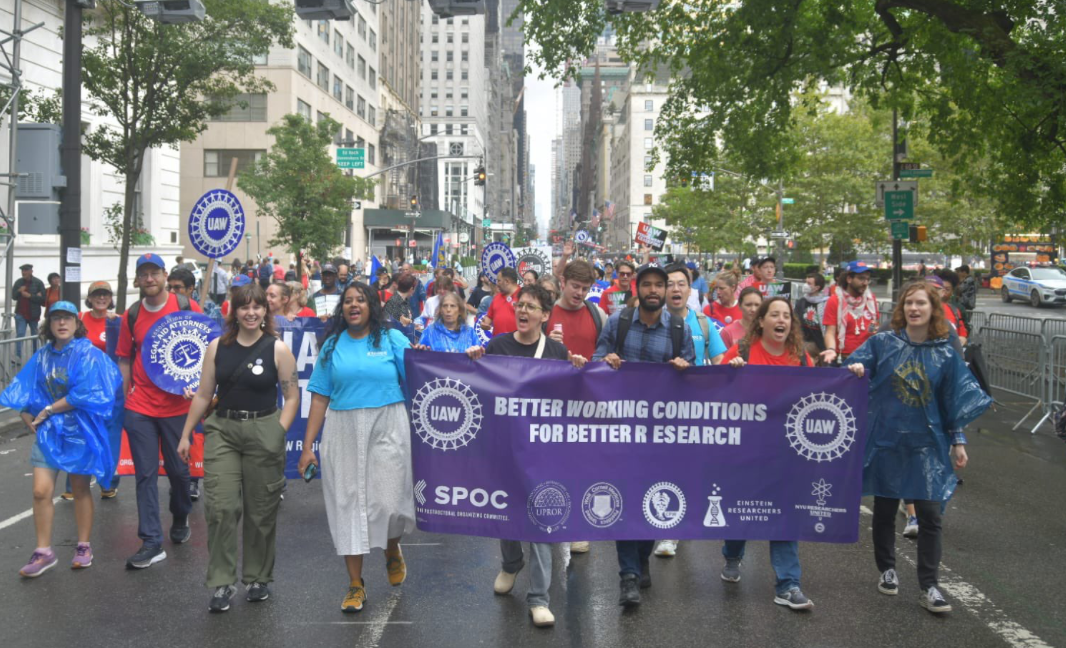
Continuing to build a movement at Mount Sinai
More than 100,000 academic employees across the U.S. have already chosen to join UAW. This includes researchers at Columbia University, The Rockefeller University, Weill Cornell Medicine, Albert Einstein College of Medicine, Harvard University, Caltech, University of Connecticut, University of Massachusetts, University of California, and University of Washington, among others. By uniting together, academic employees are driving up standards in higher education and building a powerful voice for research scientists, postdocs, graduate workers, and non-tenure track faculty.
As an Associate Scientist, I am now making less than incoming postdocs at Mount Sinai whose unionization effort won them the highest minimum salary for postdocs in the country. I support senior researchers forming a union because it will give us the power to negotiate for a salary that recognizes our experience as well as fight for other basic rights and protections we currently lack. Given the postdocs’ wins as well as the increasingly expensive cost of living in New York City, it is long overdue for senior researchers to have the right to bargain over our working conditions.
I’m an Instructor in the Department of Neuroscience. While I’ve been fortunate to have the strong support of my faculty mentors, the Instructor title is poorly defined relative to other positions. This lack of clarity has allowed some departments and PIs to underpay and under-support their most experienced lab members for far too long. I believe that a strong union can fight for higher salaries across the board, and better define the Instructor position. Sinai has already made great strides in supporting their postdoctoral fellows. Now is the time to provide equal care and support to their future faculty members.
In June 2022, Postdoctoral Fellows at Mount Sinai voted by an overwhelming 90% in favor of unionizing with UAW, despite significant efforts by Mount Sinai to convince them to vote “no”. They went on to negotiate a historic first contract, which they ratified by 98%, raising standards for postdocs across the US. Many of us were postdocs at Sinai previously, their working conditions are our working conditions, and we share many of the same priorities as researchers. Together, we drive the vast majority of the research at Mount Sinai, and by forming our own union, we can more effectively coordinate in order to build a stronger voice for all of us working in labs at Sinai.
We need a stronger voice at the national level
At a moment when the scientific enterprise is under unprecedented attack, it is even more urgent that we have a say in decisions affecting our working conditions, the security of a union contract, and a bigger voice alongside other researchers to advocate for our collective interests at the national level. The UAW has provided a critical platform for advocacy around these issues.
Unpredictability around federal research funding and visa processes affect all of us at Sinai, but cause particular stress to members of our workforce who have neither the security of a union contract – like our postdoc colleagues – nor the protections of tenure. This stress negatively impacts our ability to do quality work, and threatens to make it more difficult to retain highly-trained and specialized researchers. By bargaining collectively with Sinai, we can make our work more stable, while having a stronger platform with other UAW researchers nation-wide to advocate for policies that support researchers.
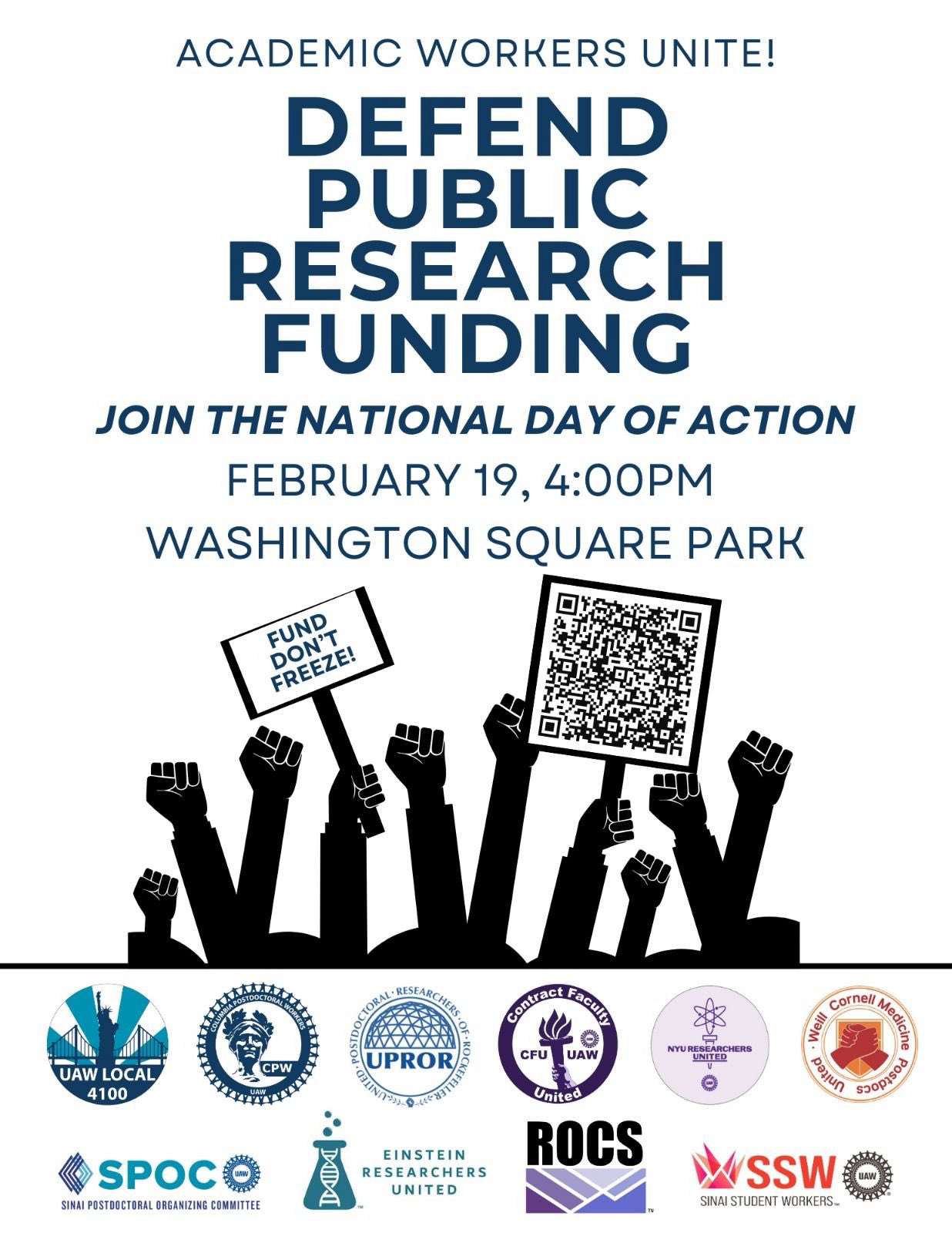
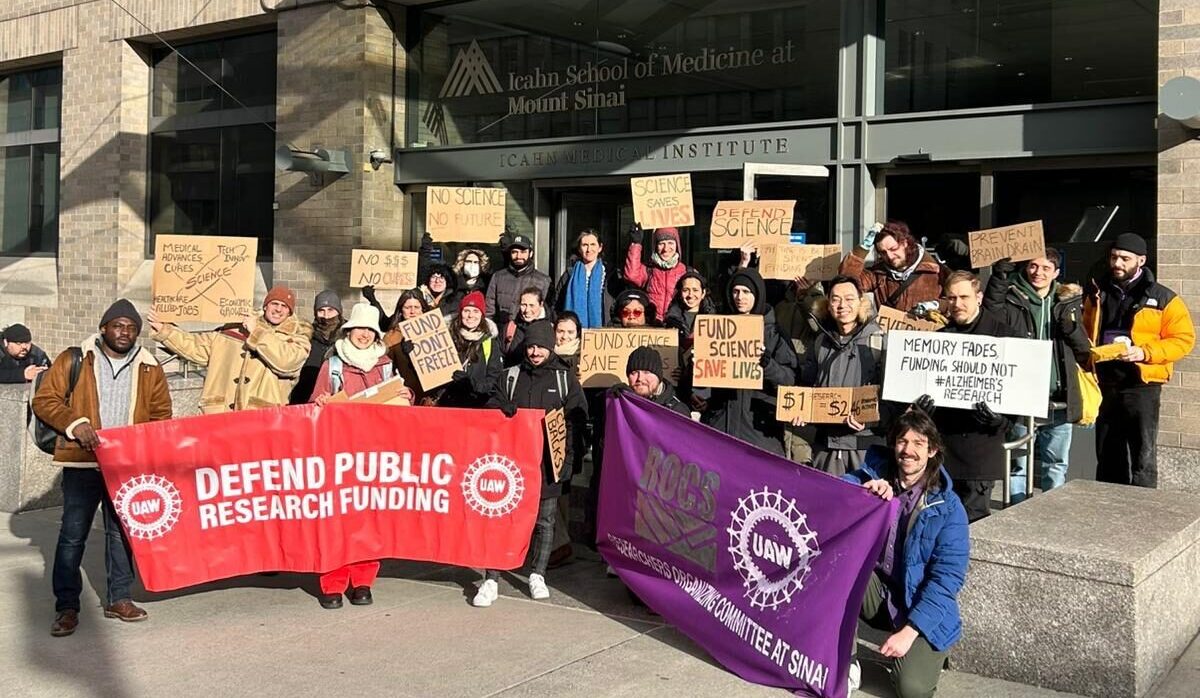
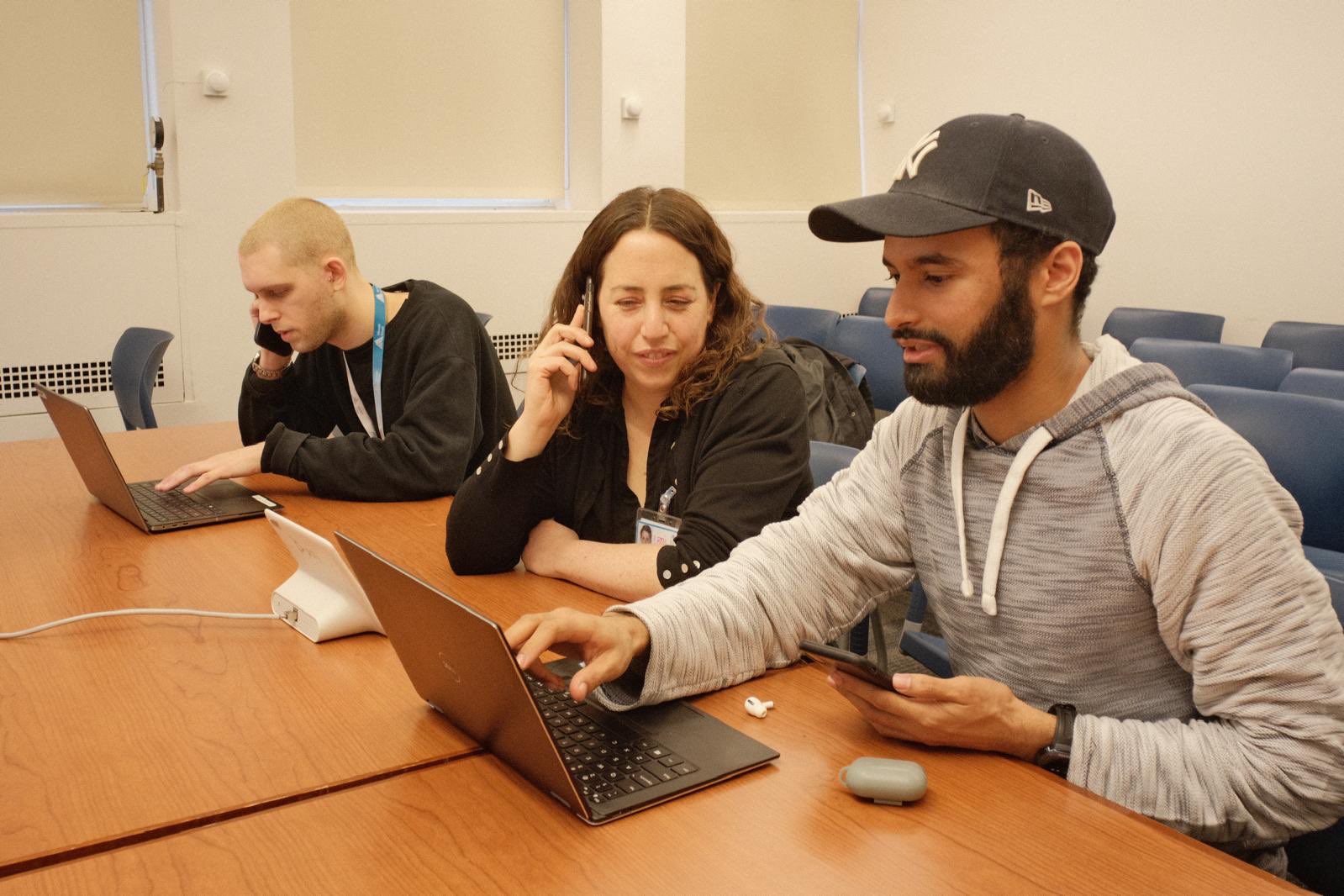
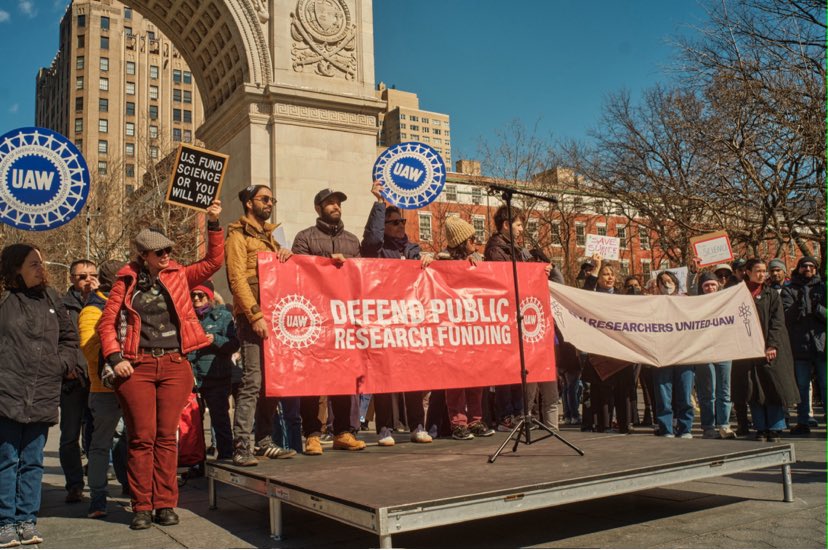
Senior researchers at SInai have already been at the forefront of the national response to funding cuts, including speaking up at rallies, calling our elected representatives, sending letters, and organizing as part of a National Day of Action. At the national level, academic workers in the United Auto Workers (UAW) have engaged in lobbying members of Congress and the senate to protect research, and the UAW was a national co-sponsor of the Stand Up for Science actions that took place in thirty two cities in early March, 2025.
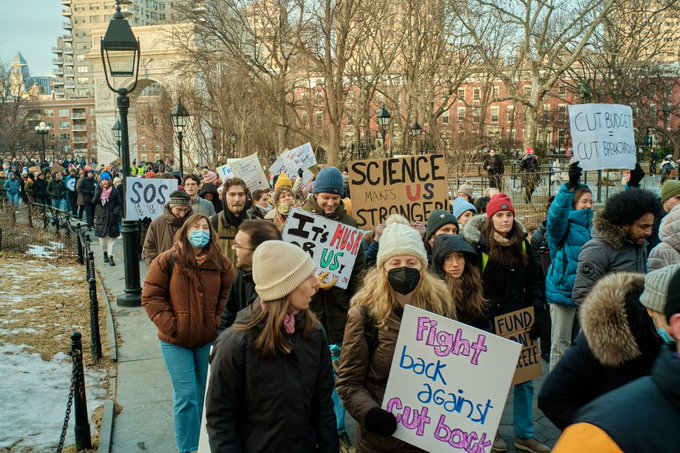
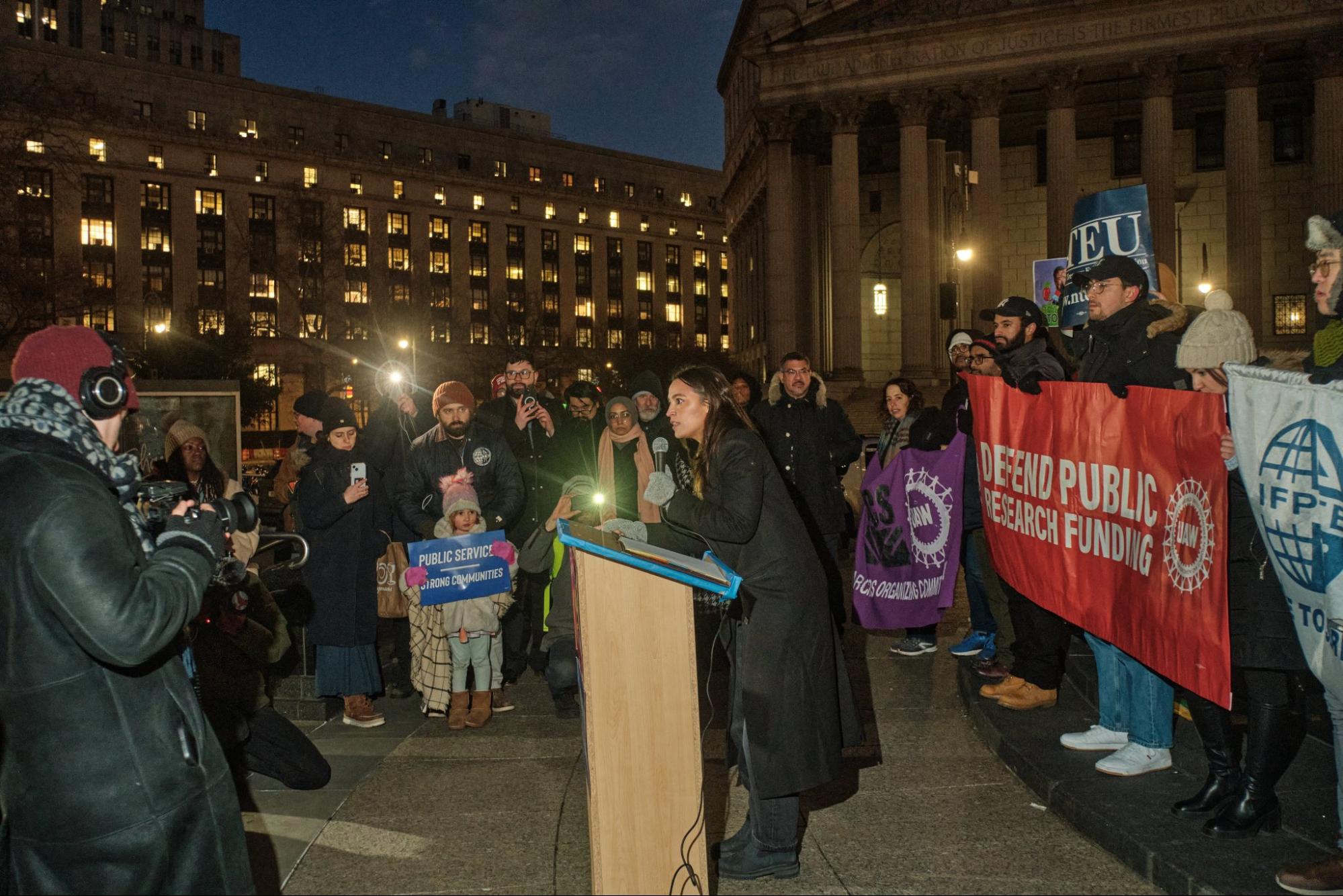
“It’s Sad We Have to Do This”: Academic Unions Are Rallying to Defend Science
UAW Local 4811 leaders meet to fight National Institutes of Health funding cuts
UAW Advocacy around research funding and international researcher rights
Read about UC postdoc and UAW efforts to support federal science funding
A greater ability to advocate for international worker rights
With more than 100,000 academic workers across the US, including postdocs, RAs and TAs, and non-tenure-track faculty, the UAW nationally and locally has become a leading voice advocating for expanded opportunities for international students to transition to early-career research positions in the US after graduation and for robust federal investment in science research. UAW academic workers’ advocacy work also played a key role, alongside others like NIH director Francis Collins, ensuring the inclusion of postdocs in the 2016 federal overtime rules that established significant improvements to postdoctoral salaries.
The UAW’s commitment to international researchers and scholars stems from the leadership of international researchers and scholars themselves. Researcher and graduate employee unions affiliated with UAW are often led by international students and scholars, who serve in top leadership positions in local unions nationwide.
Joining together with other academic workers in the UAW has become more urgent than ever as recent government actors have waged unprecedented attacks on science, sexual harassment protections, and the rights of international scholars.
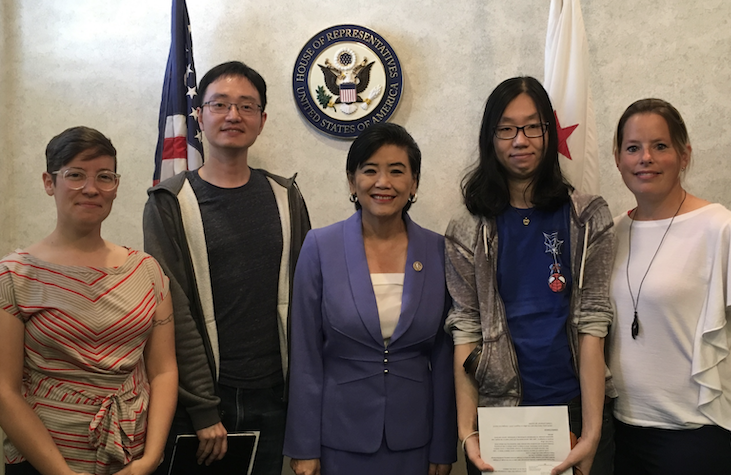
UAW Local 2865 and UAW 5810 union members with Congresswoman Judy Chu discussing her Dear Colleague Letter in support of Chinese international students at her office in Pasadena, 2018.
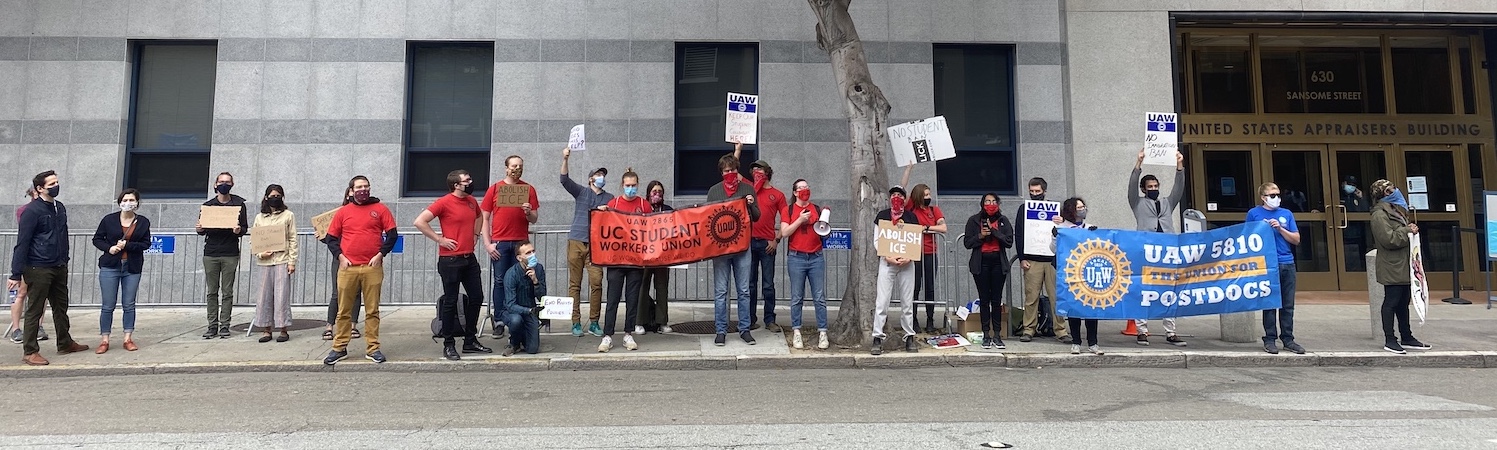
UAW 2865 and UAW 5810 members protest outside of ICE offices in San Francisco, summer 2020
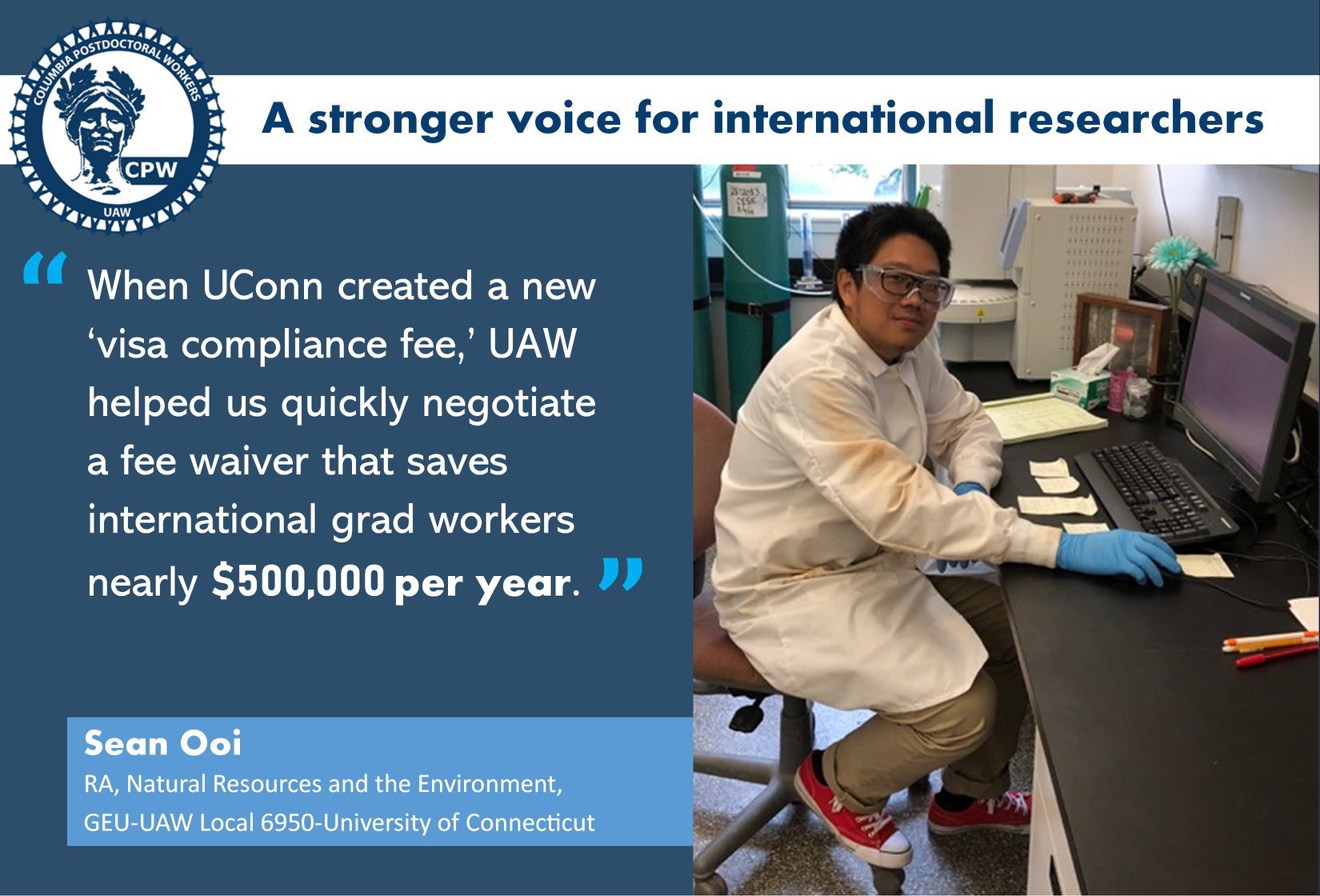

Letter to the editor: UAW is a strong ally for international students and postdocs
2023 Op-Ed: “As International Postdocs at Mount Sinai we are voting Yes for our Union”
UAW 4121 stands up against Trump ruling that limits the visas of international students and scholars
UAW 5810 Resolution To Mt. Sinai Postdocs on International Researcher Rights
Our research is stronger when everyone can contribute.
Pregnancy, childbirth and adoption should be occasions for celebration – without unnecessary stress caused by having to return to work too soon after giving birth, or concerns about unstable benefits, housing, or visa status. Unfortunately, this kind of stress is all too prevalent for Sinai researchers raising children in NYC. More women are obtaining Ph.D.s in science than ever before, but those women — often due to discrimination and unequal pressures on early-career researchers choosing to have a family — are far more likely than men to leave academia before obtaining tenure at a college or university.
Under-representation of women in senior roles has been a longstanding problem within academia, and that’s why winning significant improvements in this area is so important.
I am an Instructor in the Department of Environmental Medicine and Climate Science, and I study the impact of neurotoxicant exposure on the brain. I believe forming a union is crucial for promoting gender equity at Mount Sinai. Many parents, including myself, struggle to balance parenting responsibilities with our work as full-time researchers due to insufficient family-friendly policies. A union will allow us to negotiate with Sinai for much-needed changes like greater support for those with families and small children, closing the gender pay gap, and stronger protections against harassment and discrimination.
I was promoted from Postdoctoral Fellow to my current position as an Associate Scientist in 2021. Since then inflation has accelerated and the cost of living has surged in New York City, but my salary has remained unchanged. While Sinai increased the salary of postdocs to the highest in the country as a result of their unionization, there has not been a commensurate increase to the salary of senior researchers like myself. As a father of a one-year-old child and an international researcher, the vast majority of my salary goes to childcare, immigration, and housing. Not having a salary or benefits that account for these costs makes Mount Sinai less inclusive and distracts from senior researchers’ ability to do world-class biomedical research. I believe that forming a union will empower us to negotiate for improvements on these issues and fight for a more equitable, inclusive workplace that can attract and retain the very best researchers from around the world.
Read how other researchers have unionized and made their employers more family friendly.
Why Mount Sinai postdoc parents voted “YES” for a more family-friendly research community
Columbia graduate workers win fully-paid dependent health insurance
Sinai postdocs won an emergency support fund that can be used for childcare expenses
UW postdocs won the creation of a new caregiver fund
Columbia postdocs protected and improved a childcare benefit upt o $5,000 per year
UC Postdocs won a dedicated childcare subsidy after years of opposition from the UC administration
Together we can make Sinai more equitable and inclusive.
Inequalities — including those based on gender, race, sexual orientation and immigration status — continue to create barriers for many of the most talented to enter the academic and scientific workforce. And existing systems of recourse for problems like discrimination, harassment, and bullying too often fail and can take years. A recent survey conducted by Nature found that 1 in 5 grad students faced gender or racial-based discrimination, and another study found that early-career researchers from abroad are more likely to be threatened with termination.
Though much work remains to be done, researchers, postdocs, graduate students, and faculty in the UAW have helped make progress on many of these issues, both at the bargaining table and in policy advocacy through the UAW. At the University of Connecticut, for example, a graduate assistant worked with her union to successfully resolve a major sexual assault and harassment complaint in three months, whereas complaints of gender and race-based discrimination against Sinai leadership have remained unresolved years later. By forming a union, we can negotiate for strong, survivor-centered protections and hold Sinai accountable.
At other major research institutions like Columbia, NYU, the University of Washington, and WPI, unionized researchers have won strong protections like enforceable timelines, union representation, protection from retaliation, and the option to appeal to a neutral third-party arbitrator for cases of harassment, discrimination, and abusive conduct. With a union, we have more power to be heard, to determine our right to a safe and healthy workplace, and to ensure that our rights are enforced.